

Democratic fundraising is broken.
You get spammed, your data gets sold, middlemen get rich.
And your dollars never reach the candidates who need it most.
We have screened the candidates.
We have cut out all the middlemen.
Your dollars go straight to beating Republicans.
Want to elect Democrats? Give Smart.
Invest To Win.

Modern digital Democratic fundraising is a machine designed to pay consultants, not win elections.
Watch the video here.

THE SEVEN DEADLY SINS OF DEMOCRATIC FUNDRAISING
Annoy the Base
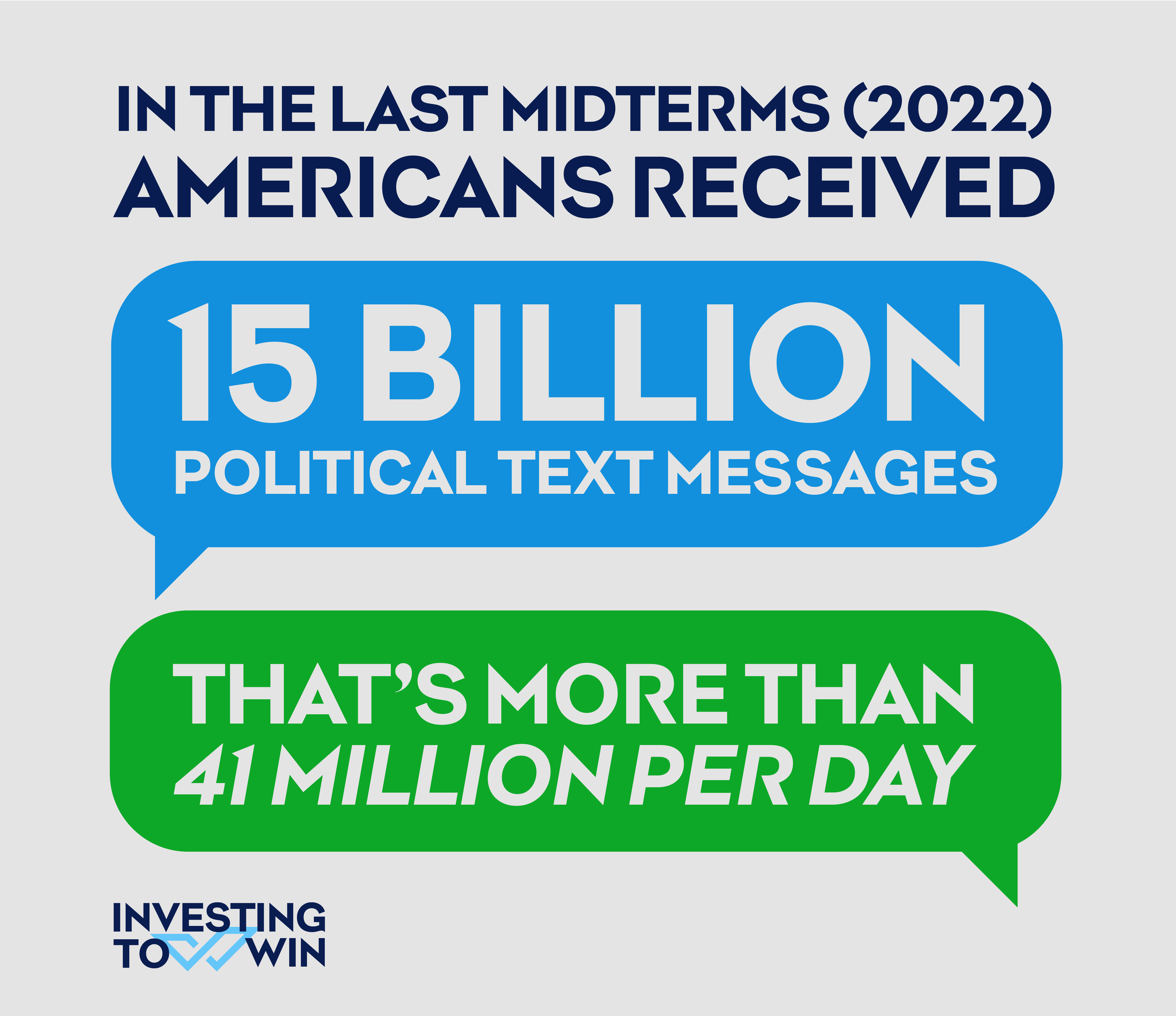
Americans received 15 billion political text messages in 2022.¹ That's 50 texts for every phone in the country. More than 41 million per day.
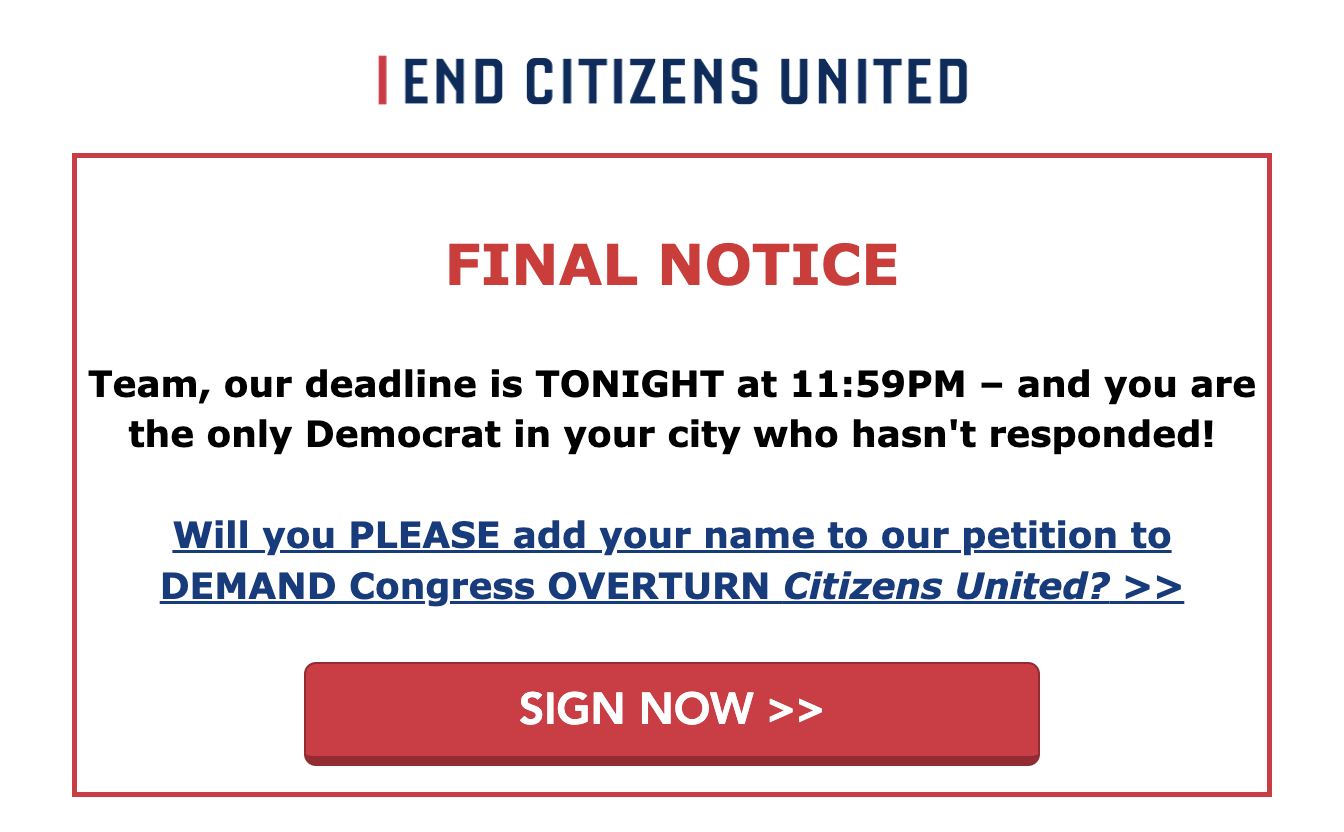
The texts are not informational. They are not persuasive. They are donation asks dressed up as emergencies. "FINAL NOTICE." "Account Delinquent." "We're BEGGING." Language designed to mimic debt collection notices and scare elderly donors into clicking.
And that's just texting. The emails are worse.
The DSCC sent 5.6 emails per day to its list. The DGA sent 5.5. The DCCC sent 3.4.² Per day. If you donated to a single Democratic candidate in 2020, your inbox has been a war zone for six years.
The FCC reported that political texts made up the single largest category of text message complaints in 2022³. Donors aren't grateful for the outreach. They're filing complaints with federal agencies.
Lauren Egan's reporting at The Bulwark has documented how Democratic consultants have watched this unfold for years, alarmed but unable to stop it.⁴
Betsy Hoover, who ran digital organizing for President Obama's 2012 reelection, put it plainly: the sheer volume and fearmongering of the messages risks alienating voters and making recipients distrust all information from Democrats, even the important stuff, like voting locations or volunteer requests. "It's an erosion of your trust, of our donors, and of our people," Hoover said, "and that's a really costly thing to lose and a really hard thing to get back."
The base isn't being built, it’s being strip-mined. And eventually there won’t be anything left.
Enrich Middlemen
Here's how the math works for a candidate who has $100,000 to invest in fundraising.
They spend $30,000 on a consulting firm ($5,000 a month for six months). They spend $40,000 buying 400,000 phone numbers at ten cents per record. They spend $30,000 sending texts at a cent and a half per send, blasting those numbers five times each. That's $100,000 out the door.⁵
They get back roughly $120,000 in donations. That's a net gain of $20,000. The consulting firm made $30,000. The data vendor made $40,000. The texting platform made $30,000. The candidate, who did this to fund a congressional race, cleared twenty grand.
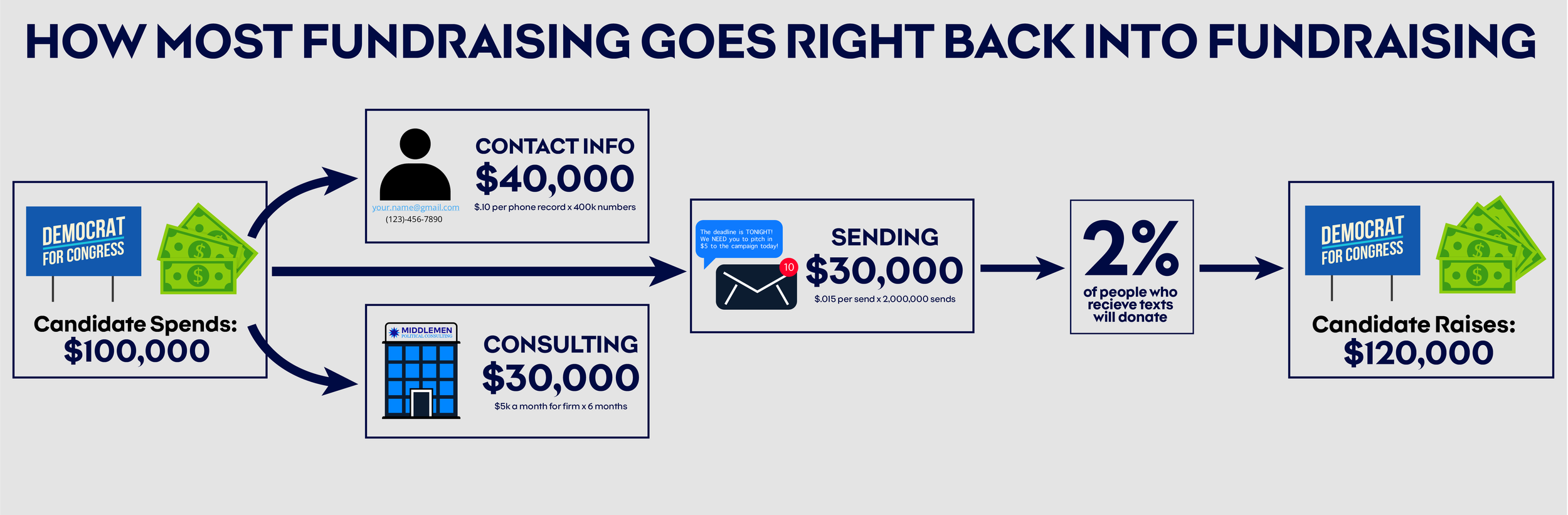
The consultants and vendors made five times what the candidate made.
Now scale it. The five highest-paid political media vendors received $2.1 billion from campaigns, PACs, and party committees during the 2024 cycle.⁶ One firm, Waterfront Strategies, went from $92 million in reported payments in 2012 to $858 million in 2024. Nearly a tenfold increase in twelve years. Political ad spending is projected to hit $10.8 billion in 2026, more than 20% higher than the last midterm.⁷
Campaigns now spend 38 cents of every dollar raised just to raise more money.⁸That's a fourfold increase since 2004. For every dollar a donor gives expecting to help elect a Democrat, 38 cents goes right back into the machine that asked for it.
Power the Scam PACs
This is where it gets seemingly criminal.
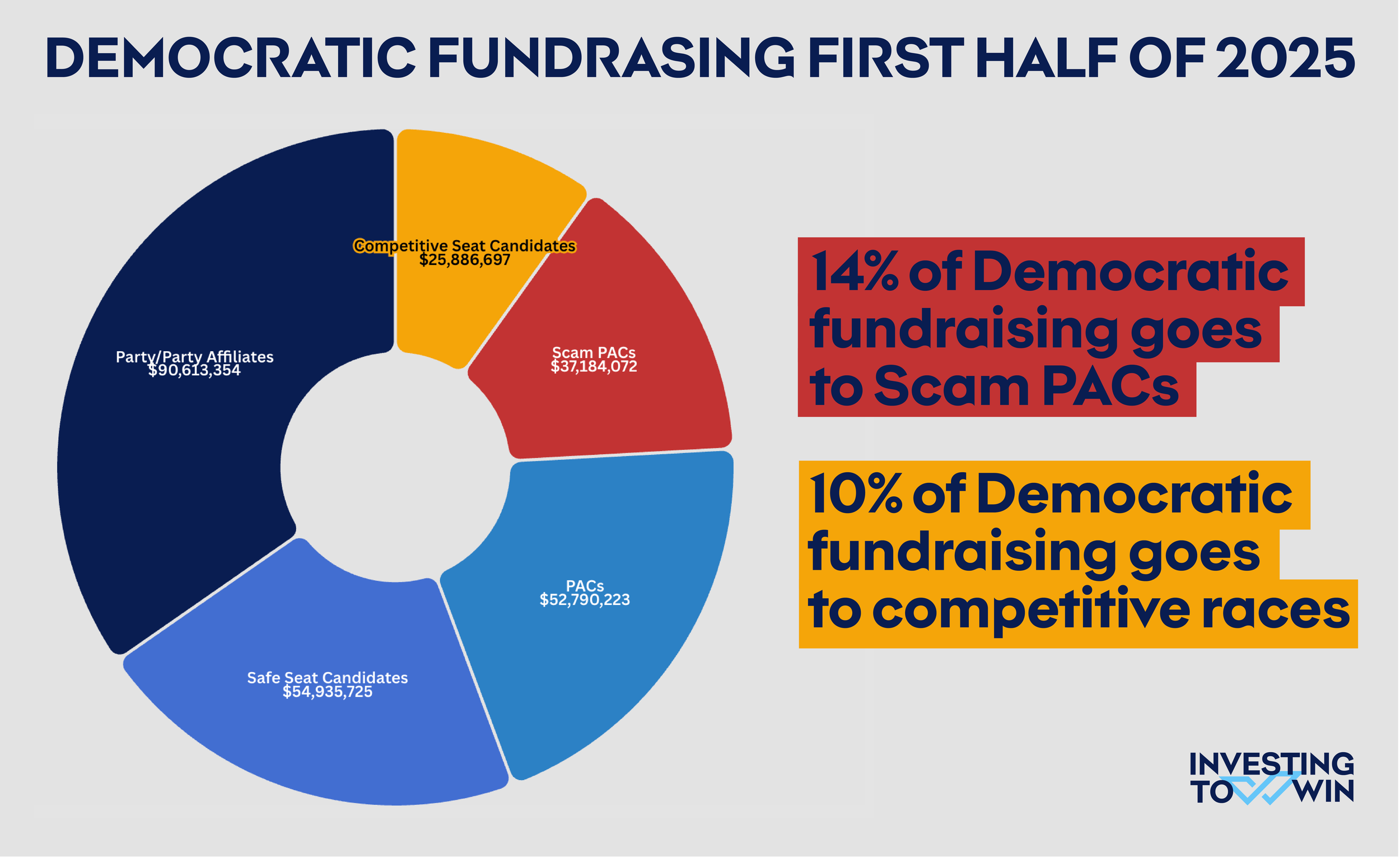
OpenSecrets identified 86 potential scam PACs in the 2022 cycle alone. These are political committees that fundraise under the pretense of supporting candidates or causes, then spend the money on more fundraising, consulting fees, and payments to firms they own or control. One called "Law Enforcement for a Safer America" raised $14 million in 2022. Eighty-seven percent went to vague "fundraising expenses."⁹
But the real story is Mothership Strategies.
Mothership was founded by former DCCC digital directors who privatized the party's own aggressive fundraising playbook. Since 2018, PACs linked to Mothership, names you'd recognize like Progressive Turnout Project, Stop Republicans, End Citizens United, have raised $678 million from individual donors.¹⁰ How much of that reached candidates, campaigns, or party committees? Eleven million dollars. That's 1.6%.
The remaining hundreds of millions went to consulting fees ($150 million), salaries ($70 million), and the fundraising machine itself. Stanford political scientist Adam Bonica, who investigated the network's FEC filings, called it a financial vortex. The money goes in and doesn't come out.
Bonica found systematic targeting of elderly donors: one 89-year-old woman in Indianapolis made 7,532 separate donations totaling $68,666.¹¹ The tactics–manufactured urgency, fake "matches," emotional manipulation–mirror the playbook of elder financial fraud.
A CNN investigation found a 78-year-old widow who limited showers to save on her water bill and canceled her long-term care insurance. She didn't understand why the retirement savings her husband had left her was dwindling. After CNN reached out to her family, they discovered she'd given more than $200,000 to Democratic political groups and candidates. Much of it went not to mainstream campaigns but to left-leaning PACs. CNN found that regulators have done virtually nothing to stop fundraisers from targeting vulnerable donors with misleading appeals, despite the FTC condemning similar tactics in commercial settings.¹²
Ninety-five percent of the money flowing into these operations comes from donors 65 and older. Half comes from donors over 80. Call it what it is: elder exploitation wearing a blue jersey.
Direct Money to Safe Seats
When money does reach actual candidates, it flows disproportionately to the wrong ones.
The top 8 fundraising House Democrats outside of leadership raised more than $18 million in 2024, compared to $11 million for their Republican counterparts. Sounds like an advantage, but it isn't. Ninety-one percent of that Democratic money went to races where the presidential result was decided by 18 points or more.¹³ Meanwhile, Republicans raised money for competitive races.
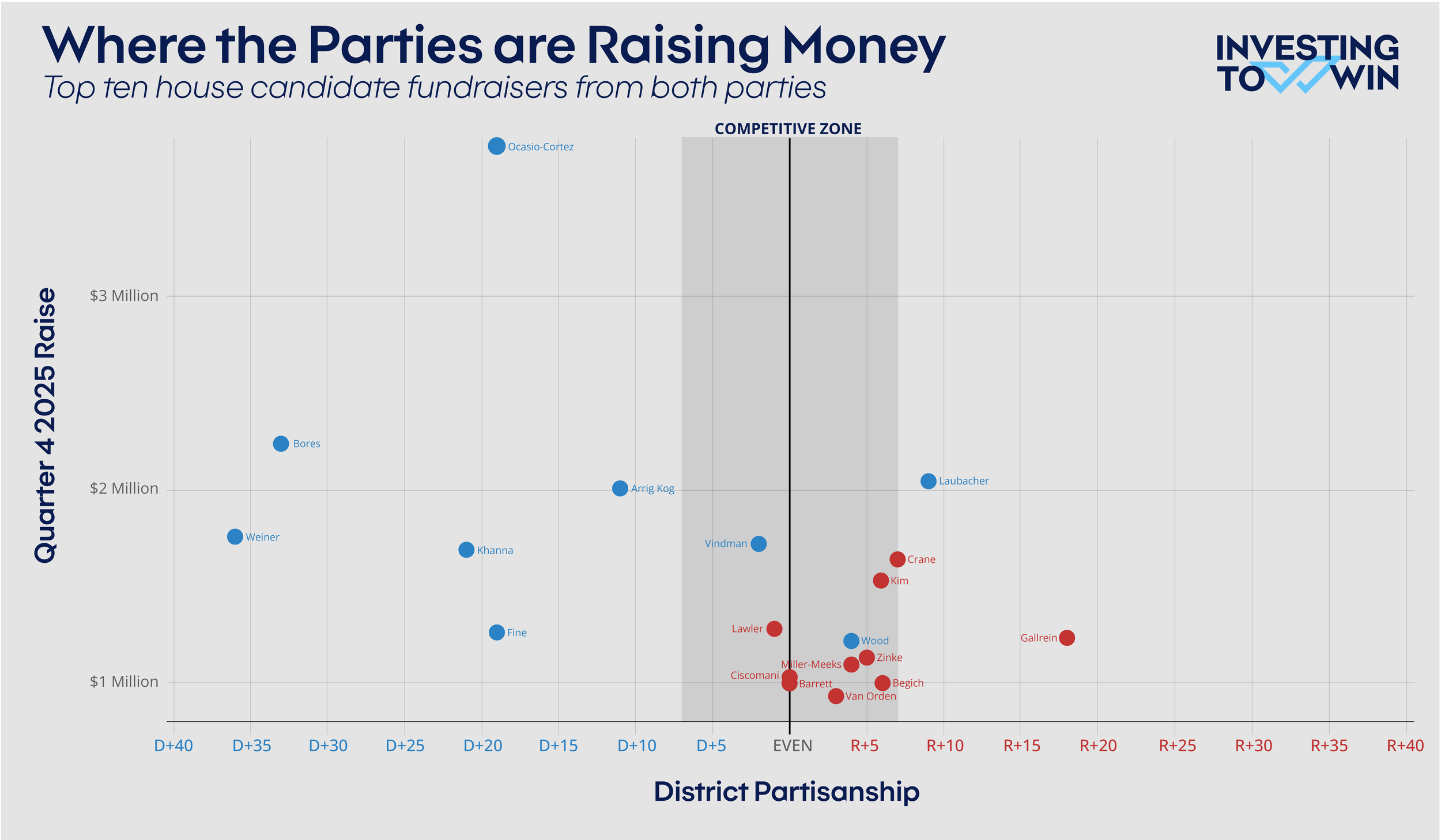
Our own Lauren Harper Pope has been documenting this problem since 2022, when she wrote in The Bulwark that Democratic donors were "getting bamboozled" by fantasy campaigns.¹⁴ The case study was Marcus Flowers, who raised $10.8 million to unseat Marjorie Taylor Greene in a district Trump won by 48 points. No national group rated it competitive, but Flowers spent more than $2 million on Facebook ads and still lost by a landslide. Meanwhile, 16 of 21 winnable districts had Democratic challengers who started the year with less than $100,000 cash on hand. One of those neglected seats was Lauren Boebert's, where Trump won with just 52.9%.
As Lauren told CNN: "We get so caught up on the super villains that we don't focus on the villains." Jessica Post, who ran the Democratic Legislative Campaign Committee, was blunter: "Our Democratic donors invest like activists, and Republicans invest like strategic business leaders."¹⁵
Even Dan Pfeiffer, Obama's former communications director, flagged this in his MessageBox newsletter: the consultants running Democratic fundraising are incentivized to burn through email and text lists chasing short-term returns, with no regard for message quality, just how much cash can be extracted. Grassroots money flows to viral candidates or to whoever is running against the right-wing villain of the moment, regardless of whether the race is winnable.¹⁶
Our own "Conceding Democracy" analysis found that in 2022, Democratic nominees had raised less than $100,000 across the entire cycle in 8 of 29 GOP-held districts where Trump received 50-54% of the vote. No Democratic candidate even filed in 19 of 45 competitive districts by mid-2023. The party was conceding winnable seats before a single vote was cast.
The fundraising machine doesn't optimize for winning the House. It optimizes for engagement, for clicks, for open rates. Safe-seat Democrats generate the most engagement because their supporters are the most online, the most activated, and the most willing to give $15 because someone told them democracy is ending.
That's great for the consulting firms collecting their cut. It's catastrophic for the party trying to win a majority.
Mixed Messages
Pull 50 fundraising emails from any major Democratic PAC and you'll see the language: "MAGA extremists." "Fascism." "This is it." "We're DOOMED if we don't act NOW."
Now pull the paid advertising from Democratic candidates in swing districts. It’s an entirely different playbook: "Safe communities." "Affordable healthcare." "Bipartisan solutions." "Jobs."
The fundraising apparatus and the electoral strategy are speaking two different languages, and the fundraising language is louder.
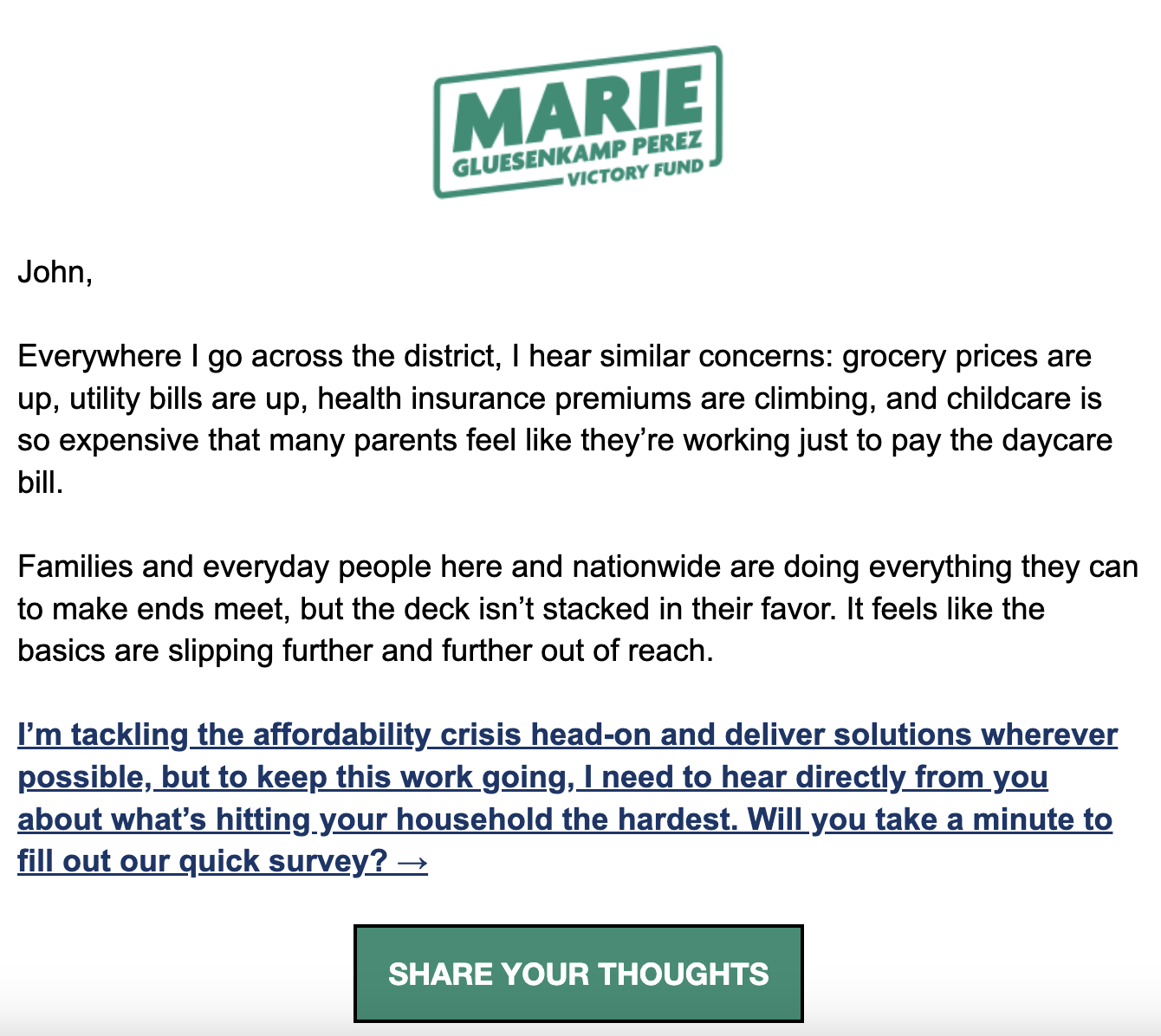
This matters because voters in competitive districts don't distinguish between "the Democrats who are running ads about kitchen table issues" and "the Democrats who are screaming about fascism in my text messages." It's all one brand. Every hysterical email from a scam PAC, every doom text from Progressive Turnout Project, every "FINAL NOTICE" demanding money, attaches to the candidate in WA-03 or MI-08 or NC-11 who is trying to talk about grocery prices.
Marie Gluesenkamp Perez can run the smartest swing-district campaign in the country, but it doesn't matter if the national fundraising apparatus is simultaneously telling her voters that Democrats think they live in a fascist state.
Short-Term Thinking
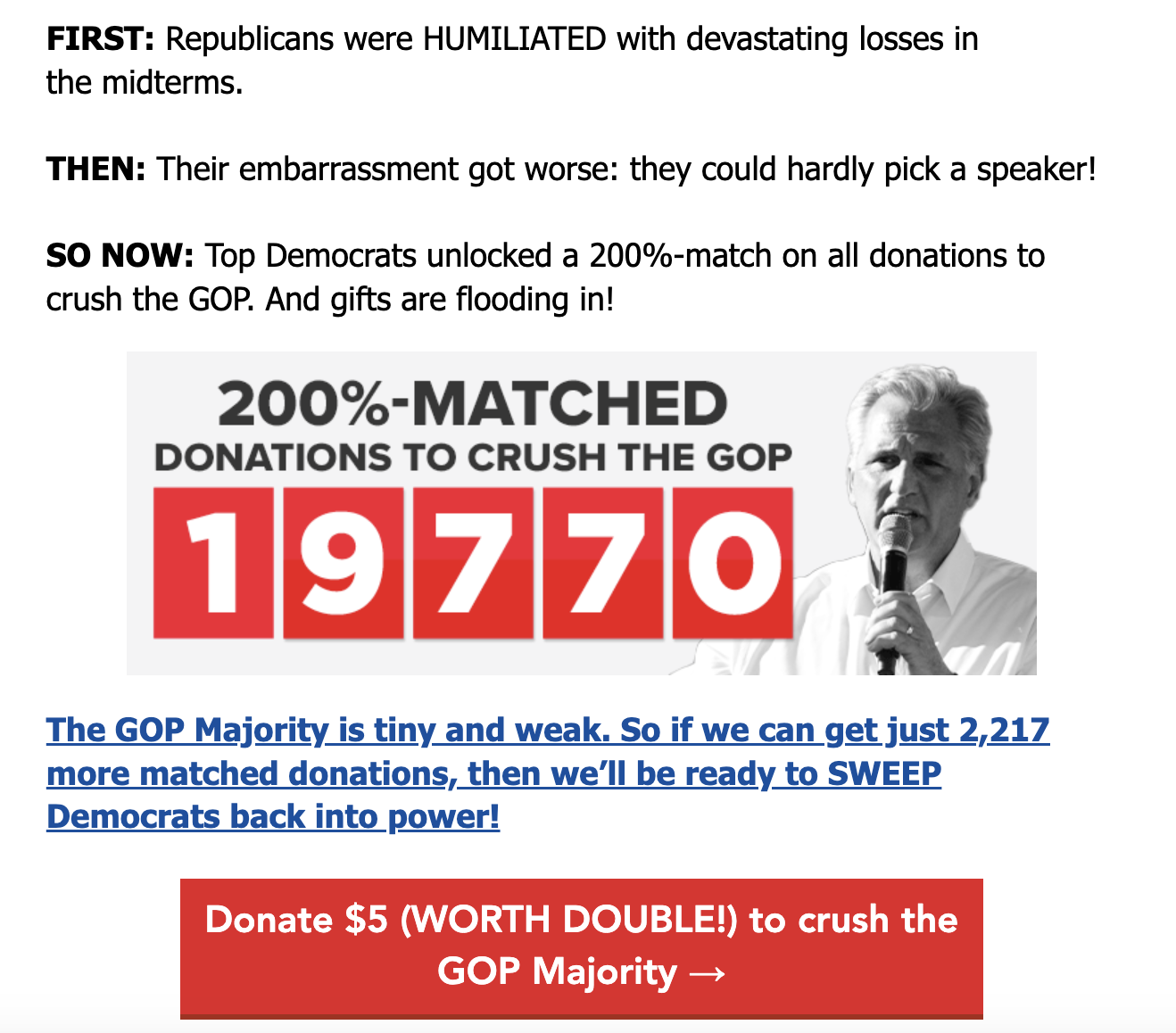
Every fundraising email has a deadline. "Midnight tonight." "Before the FEC filing." "In the next 3 hours." The urgency is always fake and the volume always spikes at end-of-quarter.
More than 140 Democratic operatives signed a letter to ActBlue in late 2024 demanding reforms.¹⁷ ActBlue updated its policies in August 2025, banning fake matches and fabricated deadlines.¹⁸ Within weeks, the DSCC was emailing supporters about "your last chance to update your membership before the midnight deadline" and the DCCC was promising 400% donation matches.¹⁹
Deadline-driven fundraising creates a cycle where campaigns are perpetually raising money for the next reporting period rather than investing in the infrastructure that wins elections.
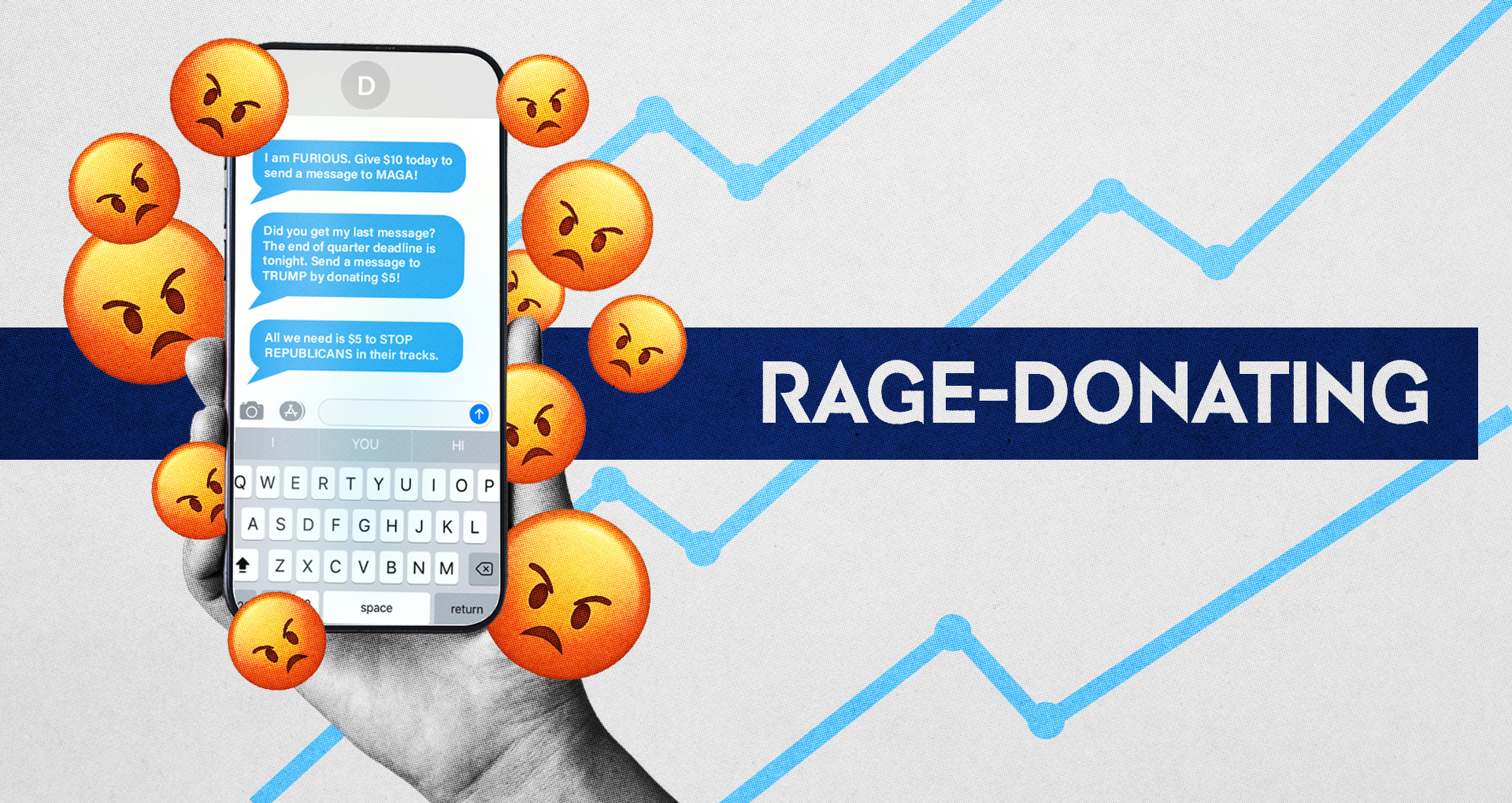
Individual Rage, Not Community
The fundamental model of Democratic digital fundraising is: make someone angry, then ask them for money.
When Trump muscled through the Republican budget bill this year, every Democrat hoped the party would mount a serious response. Instead, the party's first move was to blast fundraising texts. When Trump gutted the Department of Education, fundraising texts. Every crisis is a revenue opportunity. CNN coined a term for it back in 2022: rage-donating.²⁰
Every donation solicitation is a hub-and-spoke transaction. The PAC sends a message. You feel rage. You donate. You are alone. There is no relationship. There is no community. There is no follow-up that says "here's what we did with your money" or "here's how you can get involved beyond your credit card."
Atomizing by design. Rage donors don't ask questions about where the money goes. They don't demand accountability from the consulting firms. They don't notice that 38 cents of every dollar went to raising more dollars. They just feel a pulse of anger, tap a button, and go back to their lives.
Contrast that with the organizing model that actually wins elections. The DSA and progressive networks that powered Zohran Mamdani's mayoral campaign built community.²¹ Door-knocking operations that recruit volunteers build community. Small-dollar donor programs that report back results and invite participation build community.
The spam model builds nothing. It extracts. And the people it extracts from are disproportionately elderly, disproportionately isolated, and disproportionately unable to tell the difference between a legitimate campaign and a PAC that will spend 87% of their donation on "fundraising expenses."
Meet the candidates
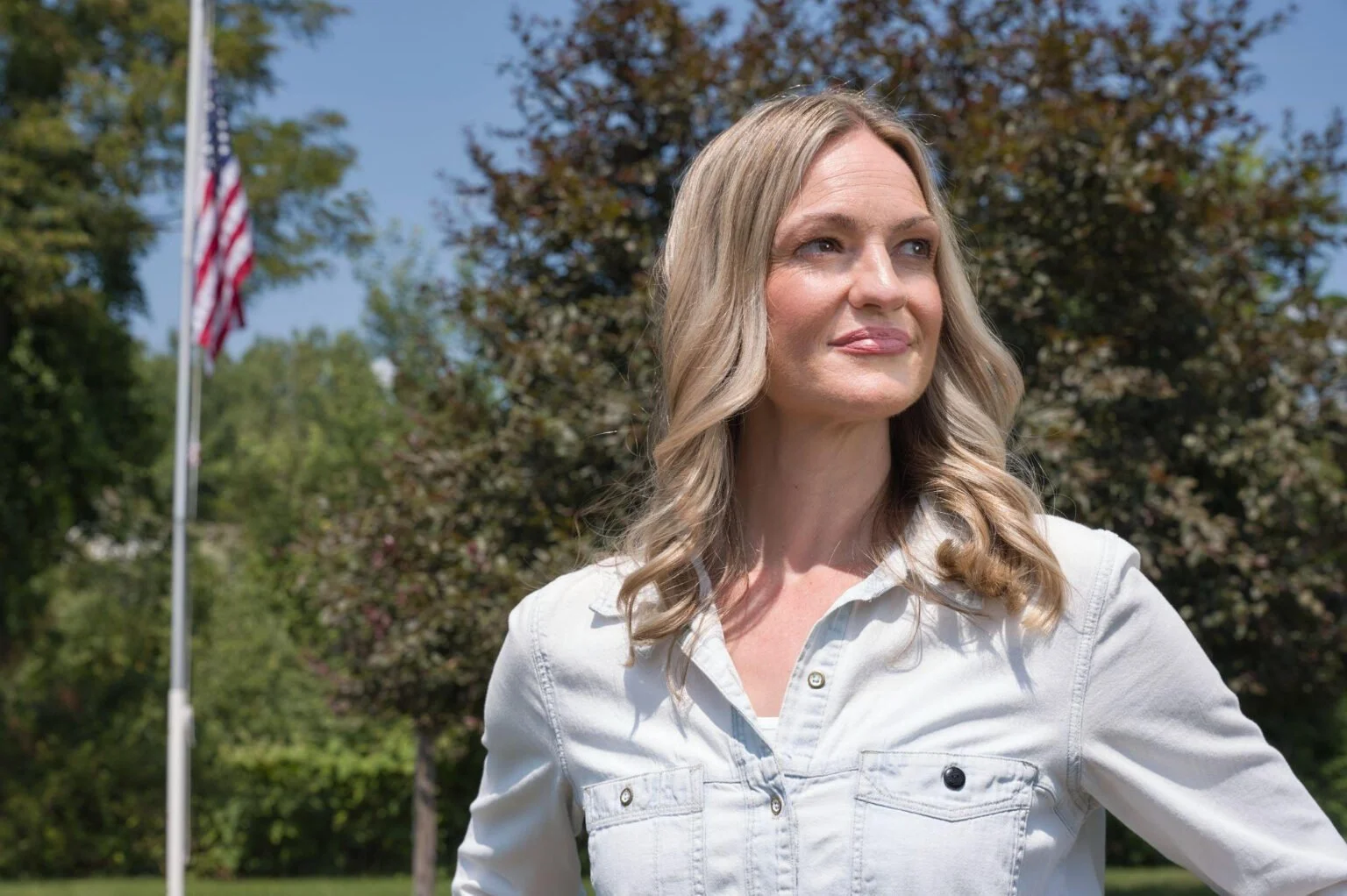
Mayor Paige Cognetti
Pennsylvania 8Paige Cognetti, the history-making Mayor of Scranton, is now running to flip Pennsylvania’s 8th Congressional District. After restoring integrity to a city government previously rocked by corruption, Paige is stepping up to unseat Republican Representative Rob Bresnahan in a pivotal battleground. Known for her fiscal discipline and commitment to transparency, Paige has proven she can win over independents and disillusioned voters in the heart of the Rust Belt. Your contribution empowers a proven executive to take her "results over rhetoric" approach to Washington, turning a key Republican-held seat blue and strengthening the foundations of our democracy.
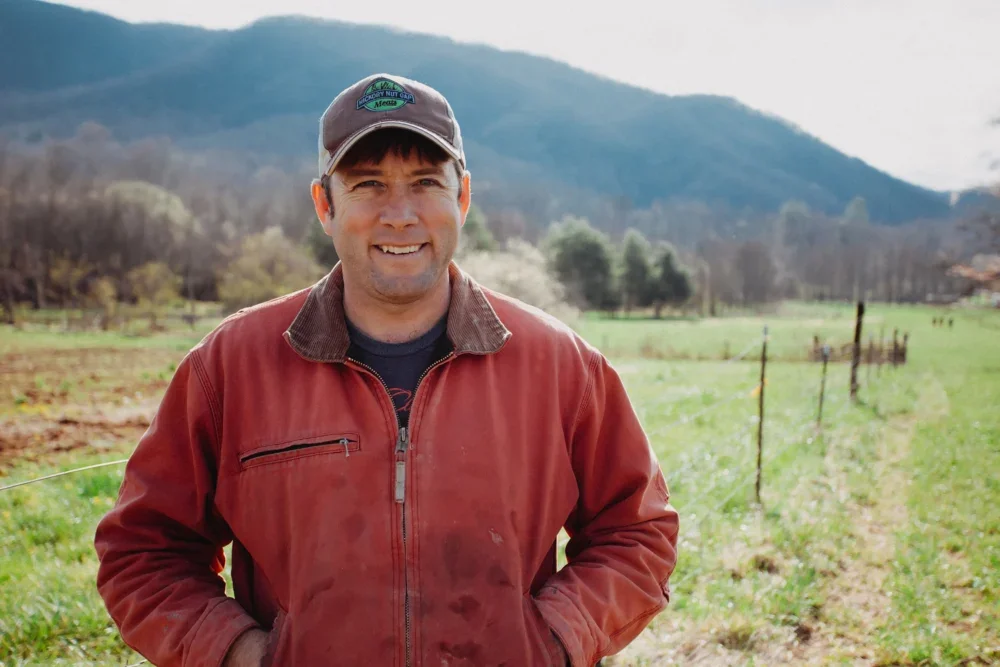
Jamie Ager
North Carolina 11Jamie Ager, a fourth-generation farmer, small business owner, and Western North Carolina native, is running to flip North Carolina’s 11th Congressional District. Raised on his family’s Hickory Nut Gap Farm, Jamie understands firsthand the challenges facing working families. He is taking on Republican incumbent Chuck Edwards. Jamie is running on lowering costs, supporting small businesses, and building a more responsive government. By donating, you are supporting a community-rooted leader who can connect with rural and working-class voters and compete in a critical battleground district.
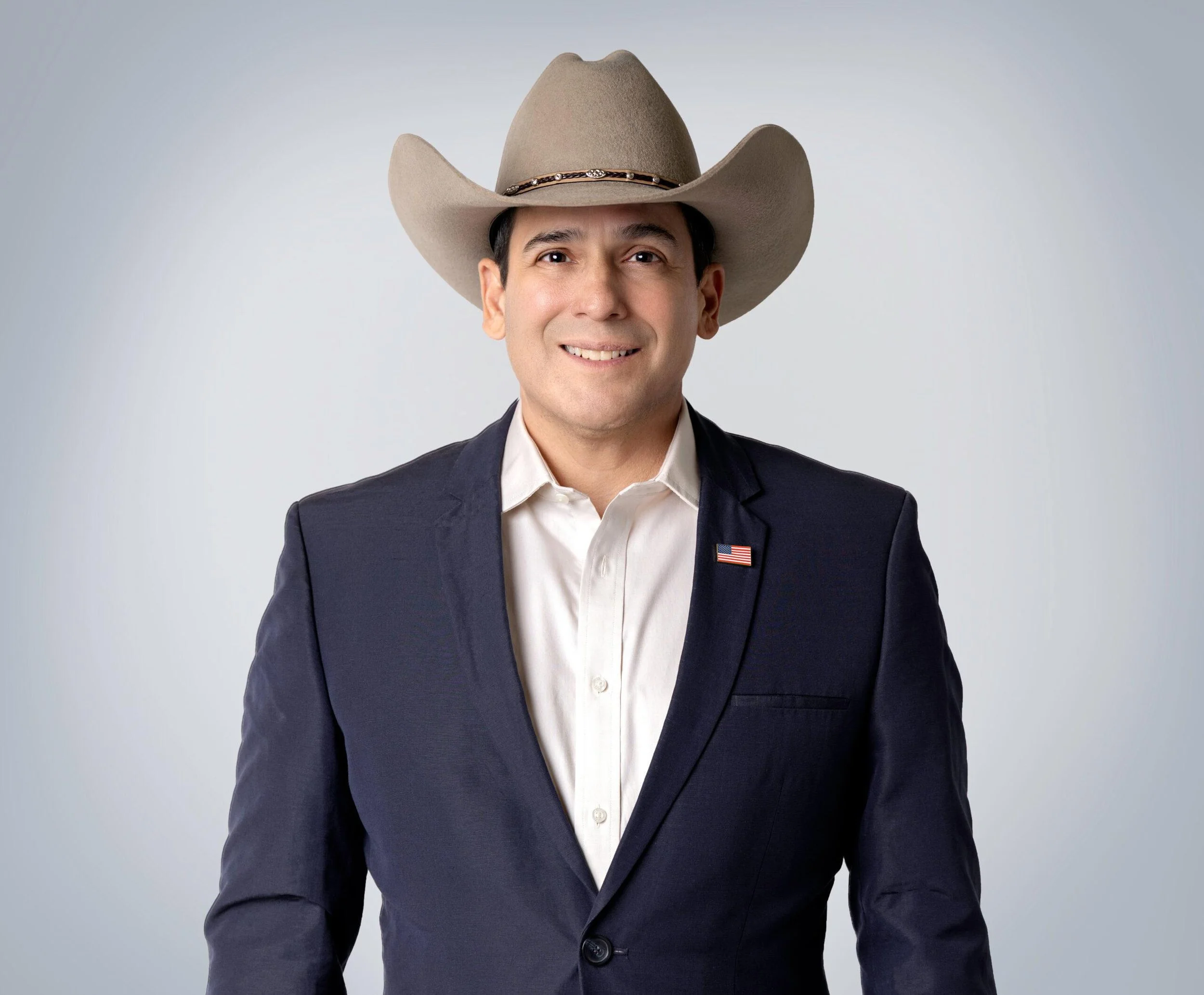
Bobby Pulido
Texas 15Bobby Pulido, a Tejano music star, small business owner, and South Texas native, is running to flip Texas’s 15th Congressional District. His deep roots in the Rio Grande Valley and decades-long career have made him a trusted voice and cultural ambassador for the region. He is taking on Republican incumbent Monica De La Cruz. Bobby is running on practical solutions to lower costs, expand healthcare access, and bring a commonsense approach to border policy. By donating, you are supporting a well-known, community-driven candidate who can win over diverse voters and reclaim a critical battleground seat.
Footnotes
¹ Alex Ford, NBC News: Billions of political text messages were sent last year - and there’s little to stop more from coming, January 26, 2023
² Aggregate reporting based on Archive of Political Emails
⁴ Laura Egan, The Bullwark: SHOCK DEVELOPMENT: Dems Crack Down on Fraudulent Fundraisers, August 10, 2025
⁵ NewDem Action Fund: Digital in Campaigns
⁶ Emma Sullivan, Open Secrets: The billion-dollar middlemen, February 9, 2026
⁷ Carolyn Neugarten, Open Secrets: Political ad spending is projected to reach a new high in 2026 midterms, January 20, 2026
⁸Adam Bonica, On Data and Democracy: 2025 Year in Review Visualization, December 31, 2025
⁹ Maia Cook, Open Secrets: How ‘Scam PACS’ line their pockets by deceiving political donors, August 18, 2023
¹⁰ Adam Bonica, On Data and Democracy: The Mothership Vortex: An Investigation Into the Firm at the Heart of the Democratic Spam Machine, August 3, 2025
¹¹ Adam Bonica, On Data and Democracy: Spam PACs Raise Money by Deceiving Seniors, August 20, 2025
¹² CNN, Political Fundraising Elderly Investigation, October 21, 2024
¹³ Dan Pfieffer, The Message Box: The High Cost of Spam: How the Flood of Dem Fundraising Texts Hurt the Party, July 30, 2025
¹⁴ Lauren Harper Pope, The Bullwark: Democratic Donors Are Getting Bamboozled, March 28, 2022
¹⁵ Dan Merica, CNN: Some Democrats fear a 2020 repeat as cash flows to long-shot candidates, April 18, 2022
¹⁶ Dan Pfieffer, The Message Box: The High Cost of Spam: How the Flood of Dem Fundraising Texts Hurt the Party, July 30, 2025
¹⁷ Sam Stein, The Bullwark: Dems Urge Fundraising Gurus to Put an End to All That Spam, December 18, 2024
¹⁸ Max Greenwood, Campaigns & Elections: ActBlue Rolls Out Policy Changes to Crack Down on ‘Bad Actors’, August 8, 2025
¹⁹ Donald Shaw, Sludge: The Democrats Won’t Stop Spamming, November 6, 2025
²⁰ Dan Merica, CNN: Some Democrats fear a 2020 repeat as cash flows to long-shot candidates, April 18, 2022
²¹ Liam Kerr, Welcome Stack:Responding to the Mamdani Shift, November 3, 2025